
 Image 1 of 3
 Image 2 of 3
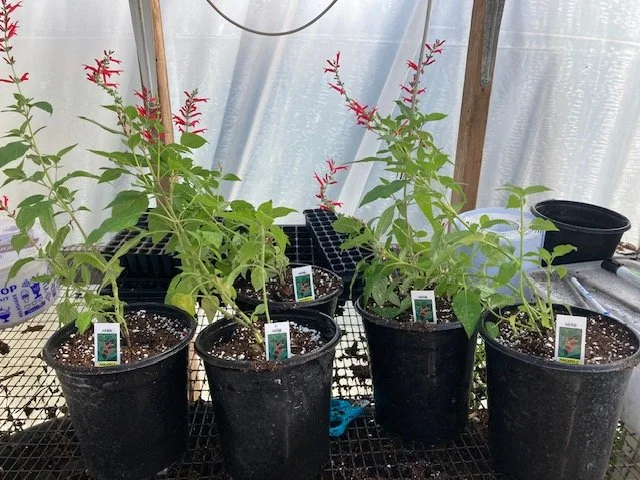 Image 3 of 3
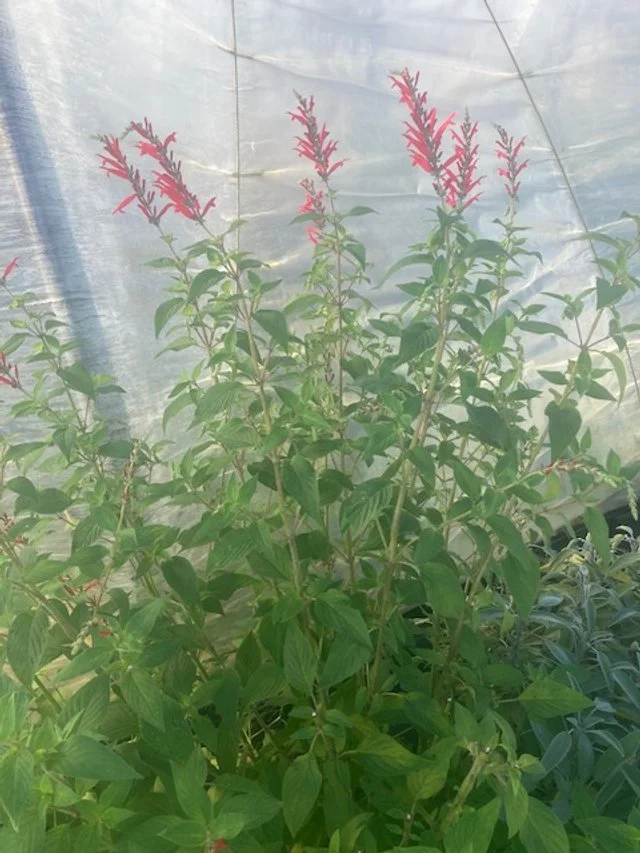
Named for the uncanny pineapple scent of its foliage, pineapple sage is worth the wait. It is a seasonal treat that gives gardeners a sense of anticipation. A small plant set out in spring after the danger of frost has passed will grow into a branching plant 3 to 4 feet tall and nearly as wide by the time it blooms. It will then sprout spires of cardinal-red blooms in late summer and fall, just in time to refuel hummingbirds and butterflies for their fall migration. Try taking it inside for the winter as a fragrant houseplant.
Leaves are best used fresh, but dry very easily. Pineapple sage makes a minty-fresh tea, can be used to add some zing in your pork dishes as well. Flowers are also edible and can be used as a garnish or in jams and jellies. Here on the farm, we like to steep pineapple sage in vinegar for a fragrant simple cleaning solution loaded with antibacterial and antioxidant properties found in the plant.
Grown in 4” pot
Named for the uncanny pineapple scent of its foliage, pineapple sage is worth the wait. It is a seasonal treat that gives gardeners a sense of anticipation. A small plant set out in spring after the danger of frost has passed will grow into a branching plant 3 to 4 feet tall and nearly as wide by the time it blooms. It will then sprout spires of cardinal-red blooms in late summer and fall, just in time to refuel hummingbirds and butterflies for their fall migration. Try taking it inside for the winter as a fragrant houseplant.
Leaves are best used fresh, but dry very easily. Pineapple sage makes a minty-fresh tea, can be used to add some zing in your pork dishes as well. Flowers are also edible and can be used as a garnish or in jams and jellies. Here on the farm, we like to steep pineapple sage in vinegar for a fragrant simple cleaning solution loaded with antibacterial and antioxidant properties found in the plant.
Grown in 4” pot